The Science Behind Play and Why Adults Need It More Than Ever
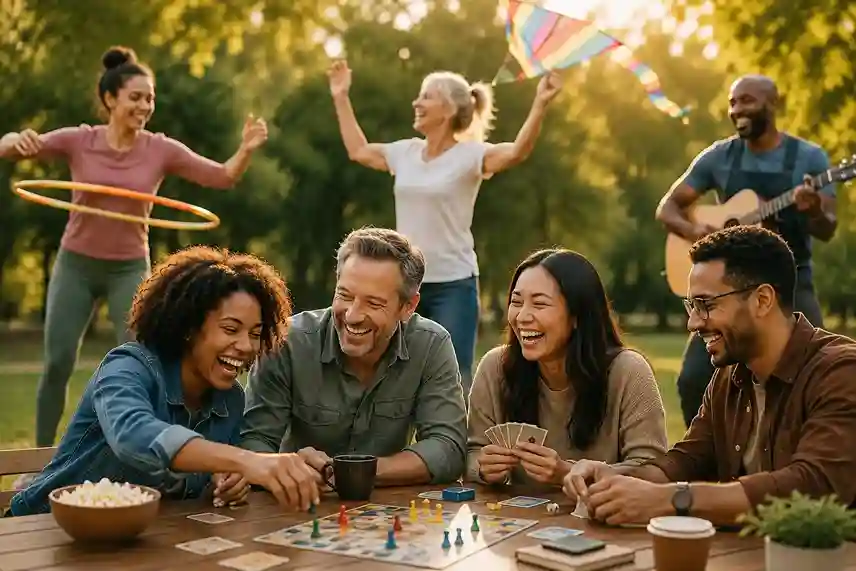
Play is often seen as something for children. Many adults think they have outgrown it. But the truth is that play is essential at every age. It helps us learn, connect, and grow. When we play, we unlock a unique type of flourishing. We have deeper fulfillment, stronger resilience, and more original ideas. The problem is that most adults have stopped playing. Upwards of 70 percent of adults around the world today have stopped doing it. This is a play deprivation crisis that is affecting our mental health, our creativity, and our society.
What Is Play
From a scientific perspective, play is what happens anytime we choose to do something without knowing exactly where it is going to end up. There are no instructions to follow or outcomes to achieve. Just two elements: intrinsic motivation and the freedom not to know the answer in advance. It is not just being silly or childlike. It is a fundamental human activity.
The type of play that matters most is not scheduled or optimized. It is not perfectly completing a page of an adult coloring book or following a tutorial. Real play is freer than that. It can feel uncomfortable at first. It is experimenting with ingredients without a recipe or doodling in the margins of a notebook. It can be that simple.
The Play Deprivation Crisis
We have systematically removed everything that makes play what it is. The spontaneity, the freedom, the wonder have been taken from all parts of adult life and replaced with efficiency and achievement. In doing so, we are losing the very survival skills that we need most right now. Things like our capacity to adapt, imagine, and even feel alive.
Play deprivation is tricky because at first we barely notice it happening. We just feel endlessly busy. But over time without play, stress can compound and burnout can become chronic. Then we walk around as playless adults, which ultimately creates a playless society. One where our institutions can grow rigid, lonely, and polarized.
Why Play Matters for Creativity
Neuroscientists have found that spontaneous imaginative thinking lives in a different part of our brain called the default mode network. That gets activated when we do things we do not normally consider productive. Playful people mind wander and daydream. We often call that laziness, but underneath the surface, our creative brain is actually hard at work connecting disparate ideas.
Even Einstein swore by this. He credited his most innovative ideas not to doing math behind a desk but to thought experiments. Protecting our nonlinear thinking matters more than ever. When we see someone staring off into the distance during a meeting, we should celebrate it because that is when thinking starts to play.
The Need for Friction
Most of us feel exhausted after work. We reach for ease. We scroll, order food at the click of a button. We want our lives to be frictionless. But our play and our lives need friction. There is a type of positive stress that comes about when we do things that require effort from us. That is why physically playing or making things with our bodies actually expands our energy and even our perception of time.
We have engineered the friction out of everything. We think playing at home is perfectly completing a page of an adult coloring book or following a YouTube tutorial. Real play is freer than that. It is experimenting with different ingredients without a recipe or doodling in the margins of your notebook.
Play in Public
The last and most insidious sign of play deprivation is cultural. It is when we do not just deprioritize play ourselves but actively punish it in the world. Silencing music in our parks or calling leisure time lazy. Almost a hundred years ago, a philosopher warned about this, suggesting that when a culture loses play, it can become brittle and polarized, unable to cope with change.
Research shows that just being in proximity to people playing can motivate us to do it too. We do not always need to be the main character. We can just amplify it when we see it. When a crowd begins to form around a musician, most of us end up racing past. Next time, take out your headphones and listen for a moment. Maybe be the first to laugh or clap or join in.
How to Bring Play Back into Life
There are three places to start injecting play back into our lives: during work, before sleep, and in public.
At work, protect your nonlinear thinking. Do not be afraid to mind wander. It is not laziness. It is your brain making connections.
Before sleep, do something that requires effort. Experiment with ingredients without a recipe. Doodle in the margins of your notebook. It can be that simple.
In public, amplify play when you see it. Listen to musicians. Join in when others are playing. Make play visible so that communities can come alive.
The Human Need for Play
Since the beginning of our species, we have been making beautiful, weird, funny, interesting things for no bigger purpose at all. Anthropologists call this capacity making special. Every culture, without having spoken to one another first, kept adding playful touches to the most ordinary aspects of their lives. They decorated their tools with intricacy. They made clothes and filled them with beads and shells. They danced and told stories and appreciated beauty for no functional or productive reason. Just because.
This exact capacity to play, to make special, is not just inside of you. It is wired into our entire species. It is always how we have stayed human. How we have bonded and adapted and even made meaning in life’s most difficult moments.
Conclusion
Play is not something we age out of. It is a lifelong trait. No matter how invisible it might feel, we can always restore it. We need to play again in any form in every part of life. Not necessarily because it will lead us somewhere better, but because we are human and humans play. The world’s brightest thinkers and engineers of evolution all play too much. So should we. Play is not a distraction from success. It is the path to it.